 Image 1 of 1
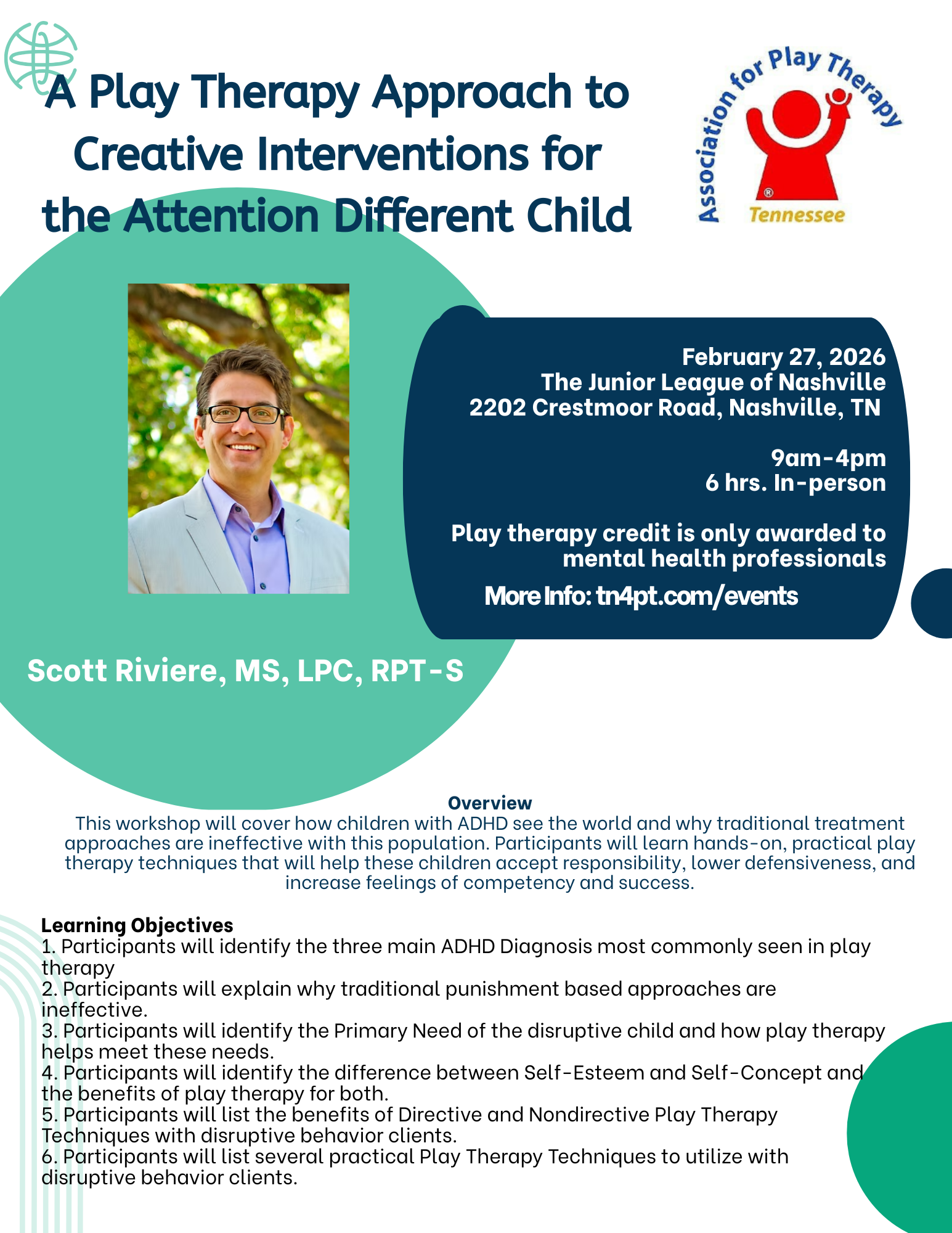
February 27, 2026
The Junior League of Nashville
2202 Crestmoor Road, Nashville, TN
9am-4pm
6 hrs. In-person
Play therapy credit is only awarded to mental health professionals
Overview
This workshop will cover how children with ADHD see the world and why traditional treatment approaches are ineffective with this population. Participants will learn hands-on, practical play therapy techniques that will help these children accept responsibility, lower defensiveness, and increase feelings of competency and success.
Learning Objectives
1. Participants will identify the three main ADHD Diagnosis most commonly seen in play
therapy
2. Participants will explain why traditional punishment based approaches are
ineffective.
3. Participants will identify the Primary Need of the disruptive child and how play therapy
helps meet these needs.
4. Participants will identify the difference between Self-Esteem and Self-Concept and
the benefits of play therapy for both.
5. Participants will list the benefits of Directive and Nondirective Play Therapy
Techniques with disruptive behavior clients.
6. Participants will list several practical Play Therapy Techniques to utilize with
disruptive behavior clients.
February 27, 2026
The Junior League of Nashville
2202 Crestmoor Road, Nashville, TN
9am-4pm
6 hrs. In-person
Play therapy credit is only awarded to mental health professionals
Overview
This workshop will cover how children with ADHD see the world and why traditional treatment approaches are ineffective with this population. Participants will learn hands-on, practical play therapy techniques that will help these children accept responsibility, lower defensiveness, and increase feelings of competency and success.
Learning Objectives
1. Participants will identify the three main ADHD Diagnosis most commonly seen in play
therapy
2. Participants will explain why traditional punishment based approaches are
ineffective.
3. Participants will identify the Primary Need of the disruptive child and how play therapy
helps meet these needs.
4. Participants will identify the difference between Self-Esteem and Self-Concept and
the benefits of play therapy for both.
5. Participants will list the benefits of Directive and Nondirective Play Therapy
Techniques with disruptive behavior clients.
6. Participants will list several practical Play Therapy Techniques to utilize with
disruptive behavior clients.